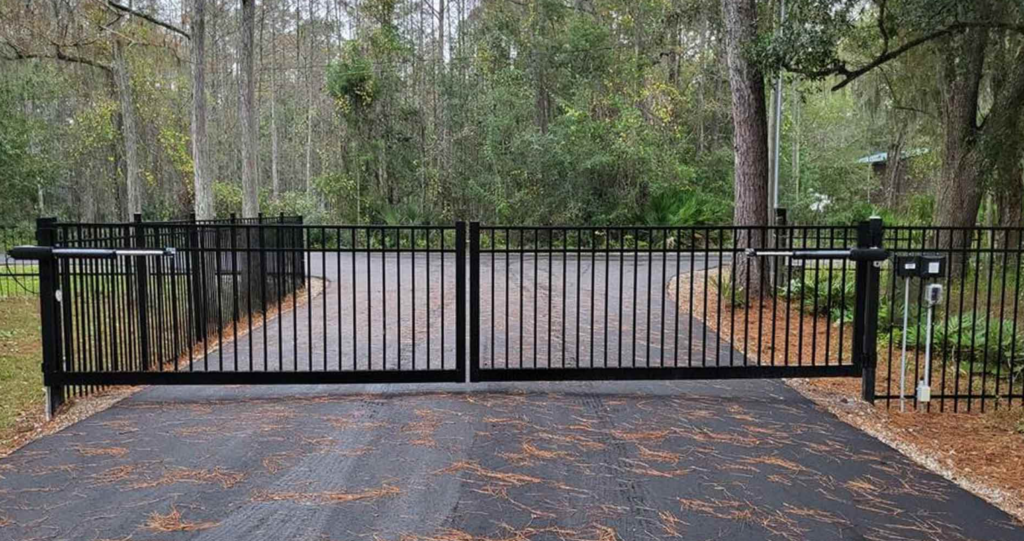
Driveway gates do more than define the entrance to a property. A properly selected and professionally installed gate can improve security, privacy, convenience, curb appeal, and access control. However, installing a driveway gate involves more than choosing a gate and attaching it to two posts. The gate, posts, hinges, operator, access-control equipment, safety devices, and surrounding driveway must all work together as one system.
Understandingdriveway gate installation servicescan help property owners make informed decisions before purchasing a gate or scheduling an installation. From choosing between sliding and swing gates to preparing the site and selecting automation equipment, every part of the installation can affect the gate’s long-term performance.
This guide explains the major considerations involved in driveway gate installation, what professional installation typically includes, how automated gates work, and how to maintain a newly installed driveway gate.
What Are Driveway Gate Installation Services?
Driveway gate installation services cover the planning, preparation, assembly, installation, adjustment, and testing of a gate system at a residential, commercial, industrial, or other property entrance.
Depending on the project, installation may include much more than mounting the gate itself. A complete installation can involve gate posts, hinges, rollers, tracks, stops, latches, gate operators, remote controls, keypads, card readers, intercoms, vehicle detection loops, photo eyes, safety edges, wiring, solar power equipment, and other access-control components.
The exact scope depends on the gate design and how the property owner wants the entrance to operate. A manual pedestrian-style driveway gate has very different installation requirements from a large automated commercial sliding gate.
Why Professional Driveway Gate Installation Matters
A driveway gate is a moving structure that may be heavy and operated hundreds or thousands of times. Incorrect installation can cause alignment problems, excessive wear, difficult operation, or safety issues.
Professional installation helps ensure that the gate is properly positioned and supported. Installers can evaluate the driveway, determine appropriate post locations, check clearances, install hardware correctly, and configure automation equipment according to the gate’s characteristics.
For automated systems, proper installation is especially important because the operator must be matched to the gate’s size, weight, construction, movement, and operating frequency.
Choosing the Right Driveway Gate Type
One of the first decisions in a driveway gate installation project is selecting the appropriate gate style. The available space, driveway slope, desired appearance, security requirements, and available power can all influence the choice.
Swing Driveway Gates
Swing gates open inward or outward using hinges mounted to posts or columns. They can be installed as single or dual gates.
Single swing gates use one gate leaf, while dual swing gates use two leaves that meet near the center of the driveway.
Swing gates can create a traditional entrance and are available in materials and designs ranging from simple steel frames to decorative ornamental gates.
However, they require sufficient clearance for the gate leaves to move through their opening arc. The installer must also consider the driveway slope and surrounding landscaping.
Sliding Driveway Gates
Sliding gates move horizontally along a driveway entrance rather than swinging across the driveway.
They can be useful where there is limited space behind or in front of the gate. Sliding gates generally require adequate side clearance for the gate to travel when opening.
They can be useful where there is limited space behind or in front of the gate. Sliding gates generally require adequate side clearance for the gate to travel when opening.
A sliding gate may use a ground track and wheels or a cantilever-style system. Automated sliding gates are commonly powered by dedicated slide gate operators.
Manual Driveway Gates
Manual gates are opened and closed by hand. They may be suitable for properties where automated access is unnecessary or where a simple gate is preferred.
Manual systems generally require fewer components than automated gates, but the gate still needs proper posts, hinges, latches, stops, and alignment.
Automatic Driveway Gates
Automatic driveway gates use an electric operator to open and close the gate. The operator can be activated using remote controls, keypads, vehicle detection systems, intercoms, card readers, smartphones, or other access-control devices.
Automation can provide greater convenience, particularly for vehicle entrances that are frequently used.
Selecting the Right Gate Material
Gate material affects appearance, weight, durability, maintenance requirements, and operator selection.
Steel Driveway Gates
Steel gates can provide a strong and durable structure and are available in many styles. Powder coating or other protective finishes can help protect the surface from environmental exposure.
Because steel gates can be relatively heavy, the gate operator and hinges should be selected according to the actual gate weight and dimensions.
Aluminum Driveway Gates
Aluminum is lighter than steel and can be used for decorative and modern gate designs. Its lower weight can also influence the requirements of the supporting hardware and automation system.
Wood Driveway Gates
Wood gates offer a traditional appearance and can provide substantial privacy when designed with solid panels.
Wood requires appropriate weather protection and maintenance, and changes in moisture can affect the gate’s dimensions and alignment over time.
Wrought Iron and Decorative Gates
Decorative metal gates can create a distinctive entrance and are often selected for architectural properties.
The design, dimensions, weight, and wind exposure should be considered when selecting hinges, posts, and an automatic gate operator.
Measuring the Driveway Before Installation
Accurate measurements are essential for a successful installation.
The installer generally needs to evaluate the available opening width, gate height, post locations, gate travel, clearance, driveway grade, and surrounding structures.
For swing gates, the area swept by the gate leaves must be considered. For sliding gates, sufficient side room must be available for the gate to move completely clear of the driveway.
Measurements should also account for vehicles using the entrance. A gate opening that is technically wide enough may still be inconvenient if the approach angle is restrictive.
Preparing the Gate Installation Site
Site preparation can determine how well a driveway gate performs after installation.
The ground should be evaluated for stability, drainage, slope, and underground utilities. Gate posts normally require a suitable foundation capable of supporting the loads generated by the gate and its movement.
For sliding gates, the installer must also prepare the track or cantilever support system correctly.
Electrical installations may require conduit, wiring routes, electrical protection, and appropriate power sources.
Installing Driveway Gate Posts
Gate posts provide the primary structural support for many driveway gate systems.
Posts must be positioned correctly and installed securely. Poorly supported posts can move over time, resulting in gate sagging, misalignment, or difficulty opening and closing.
The required post dimensions and foundation depend on factors such as gate size, weight, material, wind exposure, soil conditions, and gate configuration.
For automated gates, the post location also affects operator installation and cable routing.
Installing Hinges and Gate Hardware
Hinges allow swing gates to move while supporting their weight. Selecting the correct hinges is essential because the hardware must be capable of carrying the gate’s load.
Other hardware can include latches, stops, drop bolts, hold-back devices, rollers, brackets, chains, and mounting plates.
Hardware should be aligned carefully so that the gate moves smoothly without excessive friction or binding.
Installing a Sliding Gate Track and Rollers
Sliding gates require a properly aligned travel system.
Track-based gates use rollers that move along a fixed track. The track needs to remain straight, level where appropriate, and securely installed.
Cantilever gates use specialized rollers and support assemblies that allow the gate to move without a ground track crossing the driveway.
The selected system should match the gate’s dimensions and weight.
Installing an Automatic Gate Operator
An automatic gate operator provides the mechanical force required to move a powered gate.
Different operators are designed for different applications. Swing gate operators are designed for hinged gates, while slide gate operators are designed for horizontally moving gates.
When selecting an operator, installers may consider:
- Gate weight
- Gate length
- Opening speed
- Frequency of use
- Gate construction
- Wind exposure
- Slope and site conditions
- Available power
- Swing or sliding configuration
- Required safety equipment
Choosing an operator based only on the gate’s weight can be insufficient. The complete operating environment should be considered.
Understanding Driveway Gate Access Control
An automated gate can be connected to several types of access-control equipment.
Remote transmitters allow authorized users to activate the gate from a vehicle.
Keypads can require a personal code before allowing access.
Card and proximity readers can be used for controlled entry.
Intercom systems can allow a visitor to communicate with someone inside the property before access is granted.
Smartphone-based systems can provide remote access through compatible applications and network-connected equipment.
Vehicle detection systems can also be used to detect vehicles entering or leaving an access point.
Safety Equipment for Automatic Driveway Gates
Safety should be an essential part of an automated driveway gate installation.
Automatic gates can move substantial weight and therefore require appropriate safety equipment and installation practices.
Photoelectric sensors, often called photo eyes, can detect an object or person in the gate’s travel path. Safety edges can detect physical contact with an obstruction.
Vehicle detection loops installed in or beneath the driveway can also provide information about vehicles near the gate.
Emergency release mechanisms can allow a gate to be operated manually when required.
The exact safety equipment depends on the gate system, installation environment, applicable requirements, and operator manufacturer’s instructions.
Power Options for Driveway Gates
Automatic driveway gates can be powered through different methods.
Electrical Power
A conventional electrical connection can provide continuous power for an automated gate system. The installation may require appropriate wiring, conduit, disconnects, and electrical protection.
Solar-Powered Gate Systems
Solar power can be useful for locations where running conventional electrical wiring to the gate is difficult or expensive.
A solar gate system typically combines a solar panel, battery, charging equipment, and a compatible gate operator.
The system should be sized according to gate usage, sunlight conditions, battery requirements, and the power consumption of connected accessories.
How Much Do Driveway Gate Installation Services Cost?
The cost of driveway gate installation varies considerably because every project has different requirements.
Important cost factors can include the gate material, gate dimensions, manual or automatic operation, number of gate leaves, posts, foundations, hardware, operator, access-control equipment, electrical work, excavation, landscaping, and site conditions.
A simple manual gate may require relatively few components, while a large automated entrance can involve a complete access-control system.
For this reason, a reliable installation estimate should be based on the actual site and required equipment rather than a generic price.
Driveway Gate Installation Process
A typical professional installation can involve several stages.
1. Site Assessment
The installer evaluates the driveway, available space, grade, existing structures, power availability, and desired gate configuration.
2. Gate Selection
The appropriate gate type, size, material, and design are selected based on the property’s requirements.
3. Measurements and Layout
The gate opening and post locations are measured and marked.
4. Foundation and Site Preparation
Posts, tracks, electrical conduits, and other required infrastructure are prepared.
5. Gate Installation
The gate is mounted to its supporting structure and the necessary hardware is installed.
6. Automation Installation
If the gate is automated, the appropriate operator and accessories are installed.
7. Access-Control Installation
Keypads, remotes, intercoms, card readers, vehicle detection equipment, or other controls can be connected.
8. Safety Device Installation
Photo eyes, safety edges, detection loops, and other applicable protective equipment are installed.
9. Testing and Adjustment
The complete system is tested for movement, alignment, stopping, reversing, access control, and safety functions.
10. Final Inspection
The installer checks the completed system and explains basic operation and maintenance requirements to the property owner.
Common Driveway Gate Installation Mistakes
Several problems can be avoided through proper planning.
Choosing an Operator That Is Too Small
An undersized operator may struggle with a heavy or large gate and can experience excessive wear.
Ignoring Driveway Slope
A steep driveway can affect swing-gate clearance and the performance of some gate configurations.
Poor Post Installation
Weak or improperly positioned posts can cause alignment problems.
Insufficient Clearance
A gate needs enough room to move safely without hitting vehicles, walls, landscaping, or other structures.
Neglecting Safety Equipment
Automated gate installations should incorporate appropriate safety devices and follow applicable requirements.
Poor Drainage
Water accumulation around foundations, tracks, and electrical components can contribute to long-term problems.
Incorrect Wiring
Improper cable selection, routing, protection, or connections can affect system reliability and safety.
How Long Does Driveway Gate Installation Take?
Installation time depends on the complexity of the project.
A straightforward manual gate installation may be completed much faster than a large automated gate requiring concrete foundations, electrical work, access-control equipment, and extensive site preparation.
Projects involving new electrical service, trenching, custom fabrication, difficult terrain, or extensive access-control integration can take longer.
A professional installer should evaluate the property before providing a realistic installation schedule.
Maintaining a Newly Installed Driveway Gate
Regular maintenance can help preserve gate performance.
Swing-gate hinges should be inspected and lubricated when appropriate. Sliding gate tracks and rollers should be checked for debris, wear, and alignment.
The gate should be inspected for unusual noise, excessive movement, loose hardware, or changes in operating speed.
Automatic gate safety devices should also be tested periodically according to the equipment manufacturer’s instructions.
Solar-powered systems require additional attention to battery condition, panel cleanliness, connections, and charging performance.
When Should a Driveway Gate Be Repaired Instead of Replaced?
Not every gate problem requires a complete replacement.
A gate with worn hinges, damaged rollers, loose hardware, or a malfunctioning operator may be repairable.
However, replacement may make more sense when the gate structure is severely damaged, the supporting posts are inadequate, the automation system is obsolete, or the existing configuration cannot meet current requirements.
A professional assessment can help determine whether repair, partial replacement, or a complete new installation is appropriate.
Questions to Ask Before Hiring Driveway Gate Installation Services
Before selecting an installer, property owners can ask several practical questions.
Does the installer have experience with the specific type of driveway gate being considered?
Can they evaluate the property and provide a detailed scope of work?
Which gate hardware and operator will be installed?
What safety equipment will be included?
Will electrical work be required?
Is the system compatible with the desired access-control equipment?
What maintenance will be required?
What warranties apply to the gate, hardware, operator, and installation?
Asking these questions can make it easier to understand exactly what is included in the project.
Driveway Gate Installation for Residential Properties
Residential driveway gates are often selected for a combination of security, privacy, convenience, and appearance.
Homeowners may choose swing gates for traditional properties or sliding gates where driveway space makes horizontal movement more practical.
Automatic access can be added through remotes, keypads, smartphone systems, intercoms, or other controls.
The gate should be designed around the property’s driveway geometry rather than selected solely for its appearance.
Driveway Gate Installation for Commercial Properties
Commercial properties may have higher traffic volumes and more demanding operating requirements.
A commercial driveway gate may need a heavy-duty operator, vehicle detection, access-control equipment, safety devices, and durable hardware.
The expected number of daily cycles should be considered when selecting the operator and related equipment.
Warehouses, business parks, storage facilities, parking areas, and industrial properties may also require integration with existing security and access-control systems.
How to Choose a Driveway Gate Installation Company
When comparing driveway gate installation services, look for an installer who can address the complete system rather than only the gate itself.
Experience with the intended gate type, automation equipment, access control, safety devices, and electrical requirements can be important.
A good installation process should begin with site evaluation and end with complete system testing.
Written estimates should clearly identify the gate, hardware, operator, controls, safety equipment, installation work, electrical work, warranty coverage, and any exclusions.
Frequently Asked Questions About Driveway Gate Installation Services
How much space is needed for a driveway gate?
The required space depends on whether the gate is a swing or sliding design. Swing gates need room for the gate leaf or leaves to travel through their opening arc, while sliding gates require adequate side clearance for the gate to move.
Can an existing driveway gate be automated?
In many cases, an existing gate can be automated if its structure, hinges or rollers, alignment, and supporting posts are suitable. The gate should be evaluated before selecting an operator.
Are sliding gates better than swing gates?
The two configurations have different space and installation requirements. A sliding gate may work well where swing clearance is limited, while a swing gate may suit properties with sufficient opening space and a preference for traditional gate designs.
Can driveway gates run on solar power?
Yes. Compatible automated driveway gate systems can use solar panels and batteries where site conditions and system requirements make solar power practical.
Do automatic driveway gates need safety sensors?
Automated gates generally require appropriate safety measures, and the exact equipment depends on the system and applicable requirements. Photo eyes, safety edges, vehicle detection loops, and other devices may be used.
How often should a driveway gate be maintained?
Maintenance frequency depends on the gate design, traffic level, environment, and manufacturer’s recommendations. Regular inspections can identify worn hardware, alignment issues, debris, and electrical or automation problems before they become more serious.
Final Thoughts on Driveway Gate Installation Services
Choosing driveway gate installation services is an important step toward creating a functional and reliable property entrance. The project involves more than installing a gate panel. Proper planning requires attention to the gate type, dimensions, material, posts, hinges or rollers, operator, power source, access controls, safety equipment, and surrounding site conditions.
Whether the project involves a manual residential gate or a fully automated commercial entrance, understanding the installation process makes it easier to evaluate equipment and communicate requirements with an installer.
